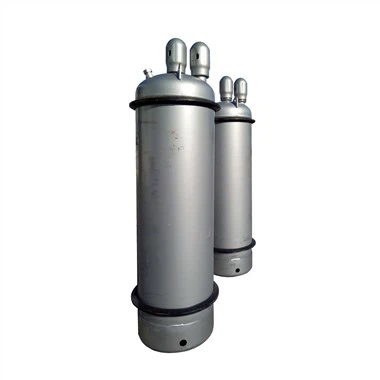
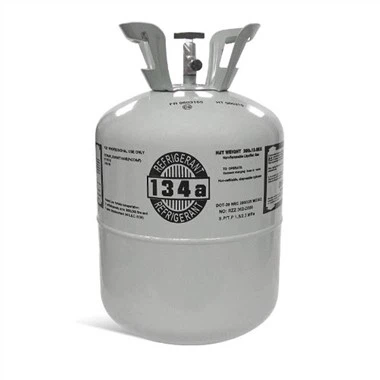
Hey there, folks! As a supplier of R152a Gas, I often get asked about the density of R152a gas. So, I thought I'd take a moment to break it down for you and share some cool facts about this stuff.
First off, let's talk about what R152a gas is. R152a, also known as 1,1 - difluoroethane, is a colorless gas with a slight ether - like odor. It's commonly used as a R152a Refrigerant in various cooling systems, and it's also used in aerosol propellants and as a blowing agent in the production of foams.
Now, the big question: what's the density of R152a gas? Well, the density of a gas can vary depending on a few factors, mainly temperature and pressure. Under standard conditions (which are defined as 0 °C or 273.15 K and 1 atmosphere of pressure, or 101.325 kPa), the density of R152a gas is approximately 3.66 g/L.
But here's the thing, in real - world applications, we rarely have standard conditions. As the temperature increases, the density of R152a gas decreases. This is because, according to the ideal gas law (PV = nRT), when the temperature (T) goes up while the pressure (P) and the amount of gas (n) remain constant, the volume (V) of the gas increases. Since density (ρ) is defined as mass (m) divided by volume (V), an increase in volume leads to a decrease in density.
Conversely, if the pressure increases while the temperature and the amount of gas stay the same, the volume of the gas will decrease, and the density will increase. So, if you're working with R152a gas in a high - pressure system, you can expect it to be denser than it would be at standard pressure.
Let's look at some practical examples. Suppose you're using R152a as a refrigerant in a car air - conditioning system. The conditions inside that system are far from standard. The compressor can raise the pressure, and the heat exchanger can change the temperature of the gas. When the gas is in the high - pressure side of the system, after being compressed by the compressor, its density will be higher. And when it moves to the low - pressure side and expands, its density will drop.
Another application is in aerosol cans. When the can is sealed, the R152a gas is under pressure. This high pressure means the gas has a relatively high density. When you press the nozzle, the gas escapes into the lower - pressure atmosphere. As it does, it expands rapidly, and its density decreases.
One of the great things about R152a gas is its relatively low global warming potential (GWP). Compared to some other refrigerants, it's a more environmentally friendly option. This makes it a popular choice for industries that are looking to reduce their carbon footprint while still maintaining efficient cooling systems.
But, like any gas, R152a has its safety considerations. It's flammable, so proper handling and storage are crucial. When dealing with R152a gas, you need to make sure you're following all the safety guidelines and regulations.
Now, if you're in the market for R152a gas, whether it's for a small - scale project or a large - scale industrial application, I'm here to help. As a supplier, I can offer high - quality R152a gas at competitive prices. Whether you need a small amount for a research project or a bulk order for your manufacturing facility, we've got you covered.
If you've got any questions about the density of R152a gas in specific conditions, or if you're just curious about how it can be used in your application, feel free to reach out. We have a team of experts who can provide you with all the information you need and help you make the right decision for your needs.


In conclusion, the density of R152a gas is an important factor to consider in many applications. Understanding how temperature and pressure affect its density can help you use it more effectively and safely. And if you're looking for a reliable source of R152a gas, look no further. Let's start a conversation about your requirements and how we can work together to meet them.
References
- Perry, R. H., & Green, D. W. (1997). Perry's Chemical Engineers' Handbook. McGraw - Hill.
- ASHRAE Handbook: Refrigeration. American Society of Heating, Refrigerating and Air - Conditioning Engineers.