


Tetrafluoroethane
Your Professional Difluoroethane Manufacturer in China
Jiangsu July Chemical Co.,Ltd is located in Jiangyin city, Wuxi, Jiangsu Province. It owns two industrial-grade gas of Dimethyl Ether& LPG stations, our mainly products include Dimethyl Ether, LPG, Methanol, R152a, R134a, Ethylene glycol and so on.
Professional Dangerous Goods Shipping
We have more than 12 years experience in handling with the dangerous goods, so we can help you to save money and time. NEVER try to ship such items as normal or regular cargos, because the goods will be checked and may be detained by your customs both in port of loading and port of discharge.
Good Quality Control
We cooperates with quality global suppliers, and we have more than 1,000 cooperative suppliers at present. We has strict criteria for supplier selection,selecting suppliers with reliable quality and stable production to cooperate to ensure the quality of goods and deliver on time.
Rich Experience
We have a complete set of 19 dangerous chemical transport vehicles, also being exclusive sales agent of domestic chemical plan with rich experience in chemical international trade.
Great Service
Whenever you have a question or need support, our team is ready to assist. Yes, even after hours with a 24/7/365 team dedicated to emergency service.


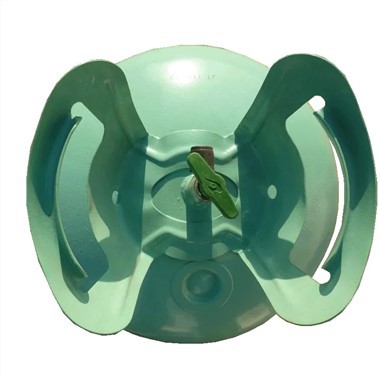


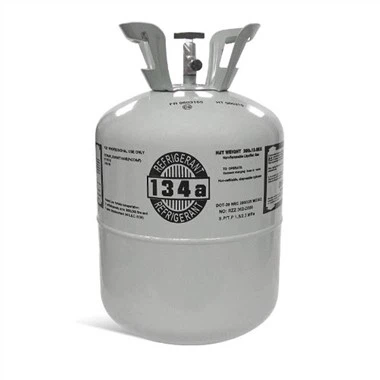

1,1,1,2-Tetrafluoroethane (also known as norflurane (INN), R-134a, Klea 134a, Freon 134a, Forane 134a, Genetron 134a, Green Gas, Florasol 134a, Suva 134a, HFA-134a, or HFC-134a) is a hydrofluorocarbon (HFC) and haloalkane refrigerant with thermodynamic properties similar to R-12 (dichlorodifluoromethane) but with insignificant ozone depletion potential and a lower 100-year global warming potential (1,430, compared to R-12's GWP of 10,900). It has the formula CF3CH2F and a boiling point of −26.3 °C (−15.34 °F) at atmospheric pressure. R-134a cylinders are colored light blue.
Product Specification
|
CAS Number |
811-97-2 |
|
EC Number |
212-377-0 |
|
PubChem CID |
KI8842500 |
|
UN number |
3159 |
|
Chemical formula |
C2H2F4 |
|
Molar mass |
102.032 g·mol−1 |
|
Appearance |
Colorless gas |
|
Density |
0.00425 g/cm3, gas |
|
Melting point |
−103.3 °C (−153.9 °F; 169.8 K) |
|
Boiling point |
−26.3 °C (−15.3 °F; 246.8 K) |
|
Solubility in water |
0.15 wt% |
|
Signal word |
Warning |
|
Other names |
Freon 134a Dymel 134a Forane 134a Genetron 134a HFA-134a HFC-134a R-134a Suva 134a Norflurane |
Application of Tetrafluoroethane
As a solvent in the preparation of cross-linked polymer microspheres through the dispersion polymerization method.
As a porogenic solvent in the preparation of porous polymethacrylate monolith via free radical polymerization.
In the synthesis of trifluorovinyllithium, a key intermediate for the preparation of 2-halo-2,3-dideoxy-arabinose derivatives of biological importance.
Physical and Chemical Properties
1, 1, 1, 2-Tetrafluoroethane is commonly known as R134a, HFC134a and HFC-134a. It is a kind of colorless, non-toxic and non-burning chemical. It is insoluble in water (67mg/L, 25 ℃ ) but soluble in ether with its potential value of ozone depletion being 0. Its thermodynamic property is very similar as CFC-12 while having its security being comparable to CFC-12, and thus has been recognized as the best substitute of CFC-12. Although there are some greenhouse effect for HFC-134a (HGWP = 0.28), this doesn’t affect it to become the primary-choice ODS (Ozone Depleting Substances) substitute. 1, 1, 1, 2-tetrafluoroethane (HFC-134a or HFA-134a) is a new generation of non-chlorofluorocarbon compounds as pharmaceutical excipients. It is mainly used as the propellant agent contained in the mist agent during the treatment of asthma and chronic respiratory disorders disease. Compared with the traditional CFC class pharmaceutical propellant, the advantage of HFC-134a is free of chlorine atom and thus having zero ODP (ozone depletion potential) value and GWP value (global warming potential) without depleting ozone and generating photochemical smog and is chemically inert and toxicologically safe. It is also a kind of environmental friendly pharmaceutical excipients and is also currently used as the major substitute of CFC contained in aerosol that is ozone-depleting.
Environmental Friendly Refrigerants
Tetrafluoroethane (R-134a) is the most widely used low or moderate-temperature refrigerant. Owing to the excellent overall performance of the tetrafluoroethane (HFC-134a), it has become a very effective and safe substitute for CFC-12 products. It is mainly applied to various areas taking advantage of R-12 (R12, Freon 12, F-12, CFC-12, Freon 12, dichlorodifluoromethane) refrigerant including: refrigerators, freezers, water dispensers, auto air conditioning, central air conditioning, dehumidifiers, cold storage, commercial refrigeration, ice machines, ice cream machine, refrigeration condensing units and other refrigeration equipment. It can also be applied to fields of aerosol propellants, medical aerosols, pesticides propellant, polymer (plastic) physical foaming agent, and protection gas of magnesium alloy.
While tetrafluoroethane refrigerant (R-134a) is the most popular choice as alternative of the feron R12 for being applied to the newly installed refrigeration equipment, owing to that R134a is different from R12 in physical and chemical properties, theoretical cycle performance as well as the applied compressor oil, for the after-sales repair of the refrigerated equipment with initial installation of R12 refrigerant refrigeration equipment repairs, if you need to add or replace the refrigerant, you have no choice but still add R12. Usually people can‘t directly apply tetrafluoroethane refrigerant (R-134a) to replace R12 (That is usually called “no cataclysmic replacement”).
Gas-Liquid Phase and Gas-Phase Synthesis of Tetra-Fluoroethane
The advantage of gas-Liquid method is that at the first-step reaction, it can almost take advantage of all the equipment and technology, liquid-phase washing, alkaline washing and drying processes for the original production of Freon products. This can effectively reduce the energy consumption. This process, for the old plant of the original production of CFCs, it is a doable route. However, the second step is equilibrium reaction with low gas one-way conversion rate and short duration life of the catalyst and other shortcomings. Therefore, this step restricts the vapor-liquid phase process for being applied to process route for large-scale production.
Gas phase method applies trichlorethylene (TCE) and anhydrous hydrogen fluoride (HF) for reaction in the action of a chromium-containing catalyst. The first step of addition and substitution reactions generates HCFC-133a, and then it is further reacted with HF in the presence of chromium-based catalyst to generate the finished product, tetrafluoroethane (HFC-134a) at a temperature of 350~380 ℃. The second-stage reaction of gas-phase method is relative difficult with the conversion rate being generally only about 20%. Therefore, in the industrial production, people mostly adopts continuous cycle method to have the large amount of raw materials be recycled to reduce the toxic and hazardous intermediate products as well as improve the overall yield.
Gas-phase method has a lot of advantages including easily controllable reaction process, small amount of waste pollution and easily being applied for large-scale continuous production. Currently gas-phase method has gradually replaced liquid-phase method and gas phase-liquid phase method to become the mainstream of the world's production of tetrafluoroethane (HFC-134a).
Precautions for Manipulation
Technical measures: it should be manipulated in a well-ventilated place. Upon high pressure condition, make sure that the internal pressure of the reaction apparatus does not exceed the cylinder pressure. For safety purpose, the gas flow path should be installed with a check valve. Do not remove the check valve before running out of the content. Wear protective equipment when handling. Wash hands and face thoroughly after handling.
Handling Precautions: Avoid contact with skin, eyes and clothing.
Storage conditions: Avoid the sunshine. Store it in a well-ventilated place. Do not expose it to environment above 40 ℃. Locked up the place where it is stored. Store it away from incompatible materials such as oxidants.
Uses
It can be used as the refrigerant in fridge and refrigerator and automotive air conditioning as well as the aerosol propellant of medicine and cosmetics.
It can be used as animal-used antibiotic with stable quality. It is not easy to produce drug resistance and cross-resistance and has a high antibacterial activity in vivo. It is mainly applied to the treatment of E. coli disease in livestock and poultry, cholera, dysentery, chronic respiratory infections and other diseases.
Production Methods
Tetrafluoroethane can be prepared by several different routes; however, the following routes of preparation illustrate the methods used:
Isomerization/hydrofluorination of 1,1,2-trichloro-1,2,2-trifluoroethane (CFC-113) to 1,1-dichloro-1,2,2,2-tetrafluoroethane (CFC-114a), followed by hydrodechlorination of the latter. Hydrofluorination of trichloroethylene, via 1-chloro-1,1,1- trifluoroethane (HCFC-133a).
General Description
A colorless gas with a slight ethereal odor. Vapors are heavier than air. Shipped liquefied under own vapor pressure. Flash point 351°F. Inhalation at high concentrations is harmful and may cause heart irregularities, unconsciousness or death without warning. Liquid contact may cause frostbite. Vapors can replace the available oxygen.
Flammability and Explosibility
Non flammable.
Pharmaceutical Applications
Tetrafluoroethane is a hydrofluorocarbon (HFC) or hydrofluoroalkane (HFA) aerosol propellant (contains hydrogen, fluorine, and carbon) as contrasted to a CFC (chlorine, fluorine, and carbon). The lack of chlorine in the molecule and the presence of hydrogen reduce the ozone depletion activity to practically zero. Hence tetrafluoroethane is an alternative to CFCs in the formulation of metereddose inhalers (MDIs). It has replaced CFC-12 as a refrigerant and propellant since it has essentially the same vapor pressure. Its very low Kauri-butanol value and solubility parameter indicate that it is not a good solvent for the commonly used surfactants for MDIs. Sorbitan trioleate, sorbitan sesquioleate, oleic acid, and soya lecithin show limited solubility in tetrafluoroethane and the amount of surfactant that actually dissolves may not be sufficient to keep a drug readily dispersed. Up to 10% ethanol may be used to increase its solubility.
When tetrafluoroethane (P-134a) is used for pharmaceutical aerosols and MDIs, the pharmaceutical grade must be specified. Industrial grades may not be satisfactory due to their impurity profiles.
Safety
Tetrafluoroethane is used as a refrigerant and as a non-CFC propellant in various aerosols including topical pharmaceuticals and MDIs. Tetrafluoroethane is regarded as nontoxic and nonirritating when used as directed. No acute or chronic hazard is present when exposures to the vapor are below the acceptable exposure limit (AEL) of 1000 ppm, 8-hour and 12-hour time weighed average (TWA). In this regard it has the same value as the threshold limit value (TLV) for CFC-12. Inhaling a high concentration of tetrafluoroethane vapors can be harmful and is similar to inhaling vapors of CFC-12. Intentional inhalation of vapors of tetrafluoroethane can be dangerous and may cause death. The same labeling required on CFC aerosols would be required for those containing tetrafluoroethane as a propellant (except for the EPA requirement).
Carcinogenicity
The results from three lifetime inhalation carcinogenesis studies with HFC 134a have been published. The first one involved exposure of groups of 80 male and 80 female rats to levels of ≤50,000 ppm 6 h/ day, 5 days/week for 2 years.An increase inLeydig cell tumors was seen in themale rats at 50,000 ppm(30%) compared to the air-exposed controls (12%). Likewise, therewas an increase in Leydig cell hyperplasia. No effects were seen at 10,000 ppm (370). The second study with rats involved snout-only inhalation exposures to levels of ≤50,000 ppm 1 h/day, 7 days/week for 108 weeks. The same investigators conducted a lifetime study withmice. In this study, groups of mice were exposed to snout-only levels of ≤75,000 ppm 1 h/day, 7 days/week for 104 weeks. No adverse effects were seen in either rats or mice. Since the total dose received by the rats in the high exposure level of this study was lower than in the Collins’ study, this report supports the observation that 10,000 ppm, 6 h/day, 5 days/week for 2 years was a NOEL. Rats were given 300 mg of HFC 134a in corn oil 5 days/ week for 52 weeks and held for a total of 125 weeks. There was no evidence for carcinogenicity.
Incompatibilities
The major incompatibility of tetrafluoroethane is its lack of miscibility with water. Since it has a very low Kauri-butanol value, tetrafluoroethane is considered to be a very poor solvent for most drugs used in MDI formulations. It also shows a low solubility for some of the commonly used MDI surfactants.
Regulatory Status
Included in the FDA Inactive Ingredients Database (aerosol formulations for inhalation and nasal applications). Included in nonparenteral medicines licensed in the UK.
Hazards
None.
Insoluble in water.
Some may burn but none ignite readily. Containers may explode when heated. Ruptured cylinders may rocket. CAUTION: Aerosols (UN1950) may contain a flammable propellant.
Vapors may cause dizziness or asphyxiation without warning. Vapors from liquefied gas are initially heavier than air and spread along ground. Contact with gas or liquefied gas may cause burns, severe injury and/or frostbite. Fire may produce irritating, corrosive and/or toxic gases.
1,1,1,2-TETRAFLUOROETHANE is chemically inert in many situations, but can react violently with strong reducing agents such as the very active metals and the active metals. Can react with strong oxidizing agents or weaker oxidizing agents under extremes of temperature.
Handling and Storage

Handling
High pressure gas. Do not puncture or incinerate container. Use equipment rated for cylinder pressure. Close valve after each use and when empty. Protect cylinders from physical damage; do not drag, roll, slide, or drop. Use a suitable hand truck for cylinder movement.

Storage
Cylinders should be stored upright, with valve protection cap in place, and firmly secured to prevent falling or being knocked over. Cylinder temperatures should not exceed 52 °C (125 °F).
First aid Measure
Eye Contact
Immediately flush eyes with plenty of water, occasionally lifting the upper and lower eyelids. Check for and remove any contact lenses. Continue to rinse for at least 10 minutes. Get medical attention if irritation occurs.
Inhalation
Remove victim to fresh air and keep at rest in a position comfortable for breathing. If not breathing, if breathing is irregular or if respiratory arrest occurs, provide artificial respiration or oxygen by trained personnel. It may be dangerous to the person providing aid to give mouth-to-mouth resuscitation. Get medical attention if adverse health effects persist or are severe. If unconscious, place in recovery position and get medical attention immediately. Maintain an open airway. Loosen tight clothing such as a collar, tie, belt or waistband.


Skin Contact
Flush contaminated skin with plenty of water. Remove contaminated clothing and shoes. Get medical attention if symptoms occur. In case of contact with liquid, warm frozen tissues slowly with lukewarm water and get medical attention. Do not rub affected area. Wash clothing before reuse. Clean shoes thoroughly before reuse.
Ingestion
Remove victim to fresh air and keep at rest in a position comfortable for breathing. Get medical attention if adverse health effects persist or are severe. Ingestion of liquid can cause burns similar to frostbite. If frostbite occurs, get medical attention. Never give anything by mouth to an unconscious person. If unconscious, place in recovery position and get medical attention immediately. Maintain an open airway. Loosen tight clothing such as a collar, tie, belt or waistband. As this product rapidly becomes a gas when released, refer to the inhalation section.
Ultimate FAQ Guide to Tetrafluoroethane
Q: Is Tetrafluoroethane safe to breathe?
Q: Is Tetrafluoroethane hazardous?
Q: What temperature should 134a be stored at?
Q: In which state can R134a be safely stored?
Q: Is Tetrafluoroethane harmful on skin?
Q: Is Tetrafluoroethane carcinogenic?
Q: Is Tetrafluoroethane explosive?
Q: Is Tetrafluoroethane the same as Freon?
Q: What are the side effects of Tetrafluoroethane?
Q: Can you put 134a in a house unit?
Q: Can R134a be used in fridge?
Q: Can you use R134a in a refrigerator?
Q: Why is R134a being phased out?
Q: Is Tetrafluoroethane or Norflurane harmful?
Q: Is R134a bad to inhale?
Q: Is Tetrafluoroethane a gas or liquid?
Q: Does Tetrafluoroethane smell?
Q: What is the most toxic refrigerant?
Q: What is the source of Tetrafluoroethane?
Q: Is there a difference between 134a and R134a?