


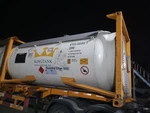
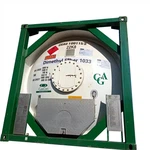
Butane
Your Professional Butane Manufacturer in China
Jiangsu July Chemical Co.,Ltd is located in Jiangyin city, Wuxi, Jiangsu Province. It owns two industrial-grade gas of Dimethyl Ether& LPG stations, our mainly products include Dimethyl Ether, LPG, Methanol, R152a, R134a, Ethylene glycol and so on.
Professional Dangerous Goods Shipping
We have more than 12 years experience in handling with the dangerous goods, so we can help you to save money and time. NEVER try to ship such items as normal or regular cargos, because the goods will be checked and may be detained by your customs both in port of loading and port of discharge.
Good Quality Control
We cooperates with quality global suppliers, and we have more than 1,000 cooperative suppliers at present. We has strict criteria for supplier selection,selecting suppliers with reliable quality and stable production to cooperate to ensure the quality of goods and deliver on time.
Rich Experience
We have a complete set of 19 dangerous chemical transport vehicles, also being exclusive sales agent of domestic chemical plan with rich experience in chemical international trade.
Great Service
Whenever you have a question or need support, our team is ready to assist. Yes, even after hours with a 24/7/365 team dedicated to emergency service.
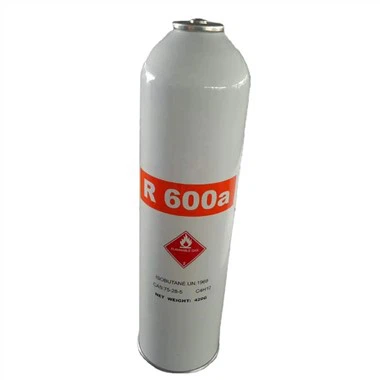
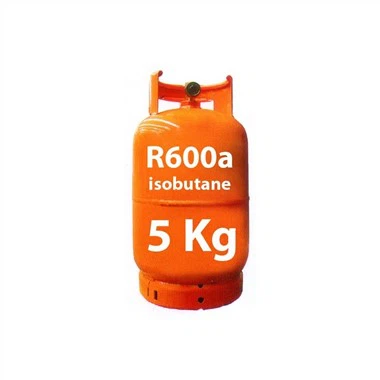
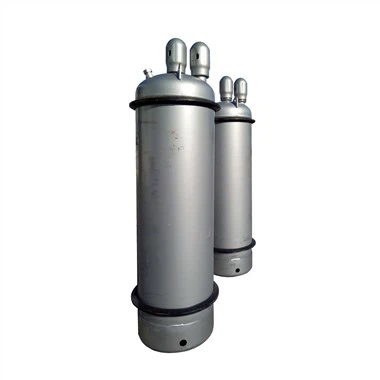

Brief Introduction to Butane
Butane or n-butane is an alkane with the formula C4H10. Butane is a highly flammable, colorless, easily liquefied gas that quickly vaporizes at room temperature and pressure. The name butane comes from the root but- and the suffix -ane. Butane is one of a group of liquefied petroleum gases (LP gases). The others include propane, propylene, butadiene, butylene, isobutylene, and mixtures thereof. Butane burns more cleanly than both gasoline and coal.
Butane Structure
The molecular formula of butane is C4H10. Its IUPAC name is butane. In the word butane, prefix ‘But’ stands for 4 carbon atoms present in butane and suffix ‘ane’ comes from the alkane series which represent that butane belongs from alkane homologous series and is saturated in nature. Butane can be easily represented by the general formula of alkanes which is CnH2n+2 where n = any positive integer or number of carbon atoms. For butane n = 4, on putting the value of ‘n’ in the general formula C4H2.4+2 = C4H10. Thus, butane is a saturated hydrocarbon (single bond between carbon atoms) with four carbon atoms and ten hydrogen atoms.

What are the Benefits of Butane?
Butane is superior to its long standing rival propane and other fuel sources such as kerosene and gasoline for portable cooking and heating devices for a wide variety of reasons.


Low Price:Although butane and propane are extracted via the same process, butane is less expensive than its hydrocarbon peer and bottles of butane also often contain higher volumes of the gas.
Fast Burn:Butane lights instantly and reaches its maximum heat output right away so that you don’t have to wait to start cooking or get warm.
Ease of Use:Compared with using other types of fuel such as unleaded gasoline and kerosene, butane is extremely easy to use. While other types of fuel may require priming with a preheat fuel or pouring a certain amount out, butane canisters are easily attached to the stove or heater and will start working right away. Butane canisters are easily resealed and can be saved and used next time.
Low Toxicity:Butane is less toxic and burns cleaner than propane and other fuels as it normally only produces carbon dioxide, not the more deadly carbon monoxide.
Energy Efficiency:Butane produces about 12% more energy than propane when the same volumes are burned above freezing. Campers will save on money, back pain, and space by using butane because they won’t need to buy or pack as many lightweight butane bottles.

Reaction with oxygen-Butane reacts with oxygen and forms carbon dioxide and water vapor. Reaction is given below:
2C4H10 + 13O2 → 8CO2 + 10H2O + Energy
If the amount of oxygen is limited, then it forms carbon monoxide and water vapor. Reaction is given below:
2C4H10 + 13O2 → 8CO2 + 10H2O
Reaction with chlorine-Butane reacts with chlorine and forms butyl chloride and HCl. Reaction is given below:
2C4H10 + Cl2 → C4H9Cl + HCl
Reaction with iodine-Butane reacts with iodine and forms 2-iodobutane and hydrogen iodide. Reaction is given below:
2C4H10 + I2 → C4H9I + HI
There are various physical properties of chemical compounds such as boiling point, melting point, density, odour and state. Some of these properties of butane are as follows:
State:Butane is a colourless, odourless gas at room temperature and atmospheric pressure but can easily be liquified using moderate pressure or low temperature.
Boiling Point:The boiling point of butane ranges from -1°C to 1°C (30 to 34 °F or 272 to 274 K). At this temperature, it changes from a liquid to a gas.
Melting Point:Butane does not have a distinct melting point because it is a gas at room temperature. However, under extremely low temperatures ranging from −140 to −134 °C (−220 to −209 °F or 133 to 139 K) it changes from crystalline form to liquid.
Density:The density of butane is about 2.48 grams per litre (g/L) at standard temperature and pressure (STP) whereas the density of the liquid butane is significantly higher, around 573 kilograms per cubic meter (kg/m³) i.e., 573 grams per litre at its boiling point.
Solubility:Butane is not very soluble in water. However, it is soluble in organic solvents such as ethanol, acetone, and benzene. The solubility of butane in water is 61mg/L at 20°C (68°F).
Odour:Pure butane gas is odourless, but an odorant called ethanethiol (or thiophane) is often added to commercial butane to give it a distinctive smell due to safety concerns.
Flammability:Butane is a highly flammable gas. It can ignite and burn in the presence of an ignition source such as a spark, flame, or heat and oxygen with ease.
Vapour Pressure:Butane has a relatively high vapour pressure. At room temperature, its vapour pressure is around 220 kPa (kilopascals), or about 2.2 times atmospheric pressure.
Molecular Weight:The molar mass of butane is approximately 58.12 grams per mole (g/mol).
Uses of Butane
Butane is used as a fuel for lighters, as a propellant in aerosol cans, and as an ingredient in cigarettes.
Butane is widely used as fuel in portable gas stoves, and camping stoves as butane can be easily liquefied under moderate pressure, making it suitable for storage and transportation in portable containers.
Butane is used in aerosol products such as hairspray, deodorants, air fresheners, and spray paints.
For small-scale refrigerators such as camping fridges, butane is used as a refrigerant as it has a low boiling point.
It is used to produce ethylene and propylene, which are used to make plastics and other chemicals.
The Different States of Butane
Butane is a gas at room temperature and normal atmospheric pressure. However, it can be easily liquified by decreasing the temperature to -1 degree Celsius or increasing the atmospheric pressure with the gas canister. When there is oxygen present, butane can burn to form carbon dioxide and water vapour. However, if there isn’t enough oxygen available, burning butane can produce toxic and dangerous carbon monoxide as its waste product. Now that we understand how butane is stored, we can understand how it is used in the following products better.

Butane Torch
This is an item that takes advantage of Butane’s flammable nature. The butane torch is regularly used in glass making, craft projects, and certain plumbing projects which require heat.
Portable Grills
Campers love to use butane in their portable grills because the fuel is easy to transport when it is compressed into a gas canister. Most portable grills use butane or propane as their main fuel source.
LPG
Butane can be combined with propane as well as other substances in order to form liquefied petroleum gas, also known as LPG. It is used in this form to manufacture petrochemicals, to calibrate gas detectors, and as a refrigerant.
Refrigerators
Methane used to be the primary gas used in refrigerators, but due to the stress that methane places on the ozone layer, this common household item has since switched to using very pure forms of butane instead. Often, gasoline is added to the butane when it is used in refrigerators, this is because adding gasoline enhances the performance of the butane.
Lighters and Aerosols
Butane is often used as the fuel in lighters as it can handle being pressurised. As the vapour pressure requirements for butane are relatively low, putting it in a small plastic pressure vessel such as a lighter is possible and not dangerous. When the pressure is released through the valve, the liquid quickly turns into gas, which is very easily ignited with the oxygen found in the Earth’s air. Some gases can damage plastic on contact, but butane is part of a group of hydrocarbons-a group of gases which don’t attack plastics-which makes it perfect for use in plastic lighters.
Environmentally Friendly Gas
Unlike gases such as carbon dioxide, methane and nitrous oxide, butane is not a greenhouse gas and does not affect the ozone layer. Butane, therefore, has become a replacement material for chlorofluorocarbons (CFCs) acting as the propellant in aerosol deodorants, so the risk of solvents negatively impacting the environment is minimised. Extremely pure forms of butane, such as isobutanes, have also replaced the ozone-layer-depleting gases known as halomethanes in refrigerants.
Butane cartridges are generally safe to store, but you do have to take precautions whenever you’re dealing with compressed fuel in a can. This is especially true if you’re storing solvents in large volumes. Cans can degrade, and solvents can get released into the air.
Heed the following storage guidelines:
●Keep all canisters away from sunlight, direct heat, flames, and oxidizers.
●Store canisters in a cool, dry location that never exceeds 122°F (50°C). Extreme heat poses the risk of explosion.
●Always store canisters indoors.
●Do not store canisters near electrical outlets.
●Never store solvent canisters in a vehicle except when transporting them.
●Store canisters in a well-ventilated area, and avoid low-level areas like basements.
●Keep canisters locked away if possible and out of reach of children.
●Ensure that all of your canisters are properly labeled.
Garages, storerooms, and large drawers are among the locations where sealed solvent cans can safely be stored. Just make sure that the location is indoors, cool, dry, and separate from any heat sources.

Ultimate FAQ Guide to Butane
Q: What are the uses of bottled butane?
Q: What are the benefits of butane gas?
Q: What is Butane Gas?
Q: What are the similarities between propane and butane?
Q: What is the difference between propane and butane?
Q: What are common uses of butane?
Q: Can Butane be harmful to Health?
Q: Is it safe to store butane indoors?
Q: Does butane need to be refrigerated?
Q: Does butane expire?
Q: Can butane gas be stored inside?
Q: What are the safety precautions for butane?
Q: How long does butane last unused?
Q: How do you store butane at home?
Q: How should gas canisters be stored?
Q: Is it bad to leave butane in the cold?
Q: Can you store butane gas bottles outside?
Q: How do you prevent butane explosions?
Q: Is butane easily flammable?
Q: Can you keep butane in your car?