


Difluoroethane
Your Professional Difluoroethane Manufacturer in China
Jiangsu July Chemical Co.,Ltd is located in Jiangyin city, Wuxi, Jiangsu Province. It owns two industrial-grade gas of Dimethyl Ether& LPG stations, our mainly products include Dimethyl Ether, LPG, Methanol, R152a, R134a, Ethylene glycol and so on.
Professional Dangerous Goods Shipping
We have more than 12 years experience in handling with the dangerous goods, so we can help you to save money and time. NEVER try to ship such items as normal or regular cargos, because the goods will be checked and may be detained by your customs both in port of loading and port of discharge.
Good Quality Control
We cooperates with quality global suppliers, and we have more than 1,000 cooperative suppliers at present. We has strict criteria for supplier selection,selecting suppliers with reliable quality and stable production to cooperate to ensure the quality of goods and deliver on time.
Rich Experience
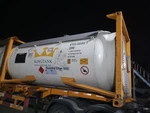
We have a complete set of 19 dangerous chemical transport vehicles, also being exclusive sales agent of domestic chemical plan with rich experience in chemical international trade.
Great Service
Whenever you have a question or need support, our team is ready to assist. Yes, even after hours with a 24/7/365 team dedicated to emergency service.


Difluoroethane is an organofluorine compound with the chemical formula C2H4F2. This colorless gas is used as a refrigerant, where it is often listed as R-152a (refrigerant-152a) or HFC-152a (hydrofluorocarbon-152a). It is also used as a propellant for aerosol sprays and in gas duster products. As an alternative to chlorofluorocarbons, it has an ozone depletion potential of zero, a lower global warming potential (124) and a shorter atmospheric lifetime (1.4 years). It has many other names (synonyms), including:
●1,1-difluoroethane
●1,1-difluoro
●DFE
●Ethane
●Ethylidene difluoride
●Ethylidene fluoride
●Freon 152a
●HFC-152a
●R-152a
Product Specification
|
PubChem CID |
6368 |
|
Molecular weight |
66.0500 |
|
IUPAC Standard InChI |
InChI=1S/C2H4F2/c3-1-2-4/h1-2H2 |
|
IUPAC Standard InChIKey |
AHFMSNDOYCFEPH-UHFFFAOYSA-N |
|
CAS Registry Number |
624-72-6 |
|
Molecular Formula |
C2H4F2 |
|
Density |
900 g/L @ 25 °C |
|
Solubility in water |
0.54% @ 0 °C |
|
Vapor pressure |
536 kPa (4020 mmHg) @ 21.1 °C 510 kPa (5.1 bar) @ 20 °C |
|
Melting point |
−117 °C (−179 °F; 156 K) |
|
Boiling point |
−24.7 °C (−12.5 °F; 248.5 K) |
|
Odour |
Sweetish. Odour threshold is subjective and inadequate to warn of overexposure. |
|
PH |
Not applicable for gases and gas mixtures |
Difluoroethane Chemical Basic Information
Chemical Properties: liquefied colourless gas under pressure.
Chemical Properties: Difluoroethane is a liquefied gas and exists as a liquid at room temperature when contained under its own vapor pressure, or as a gas when exposed to room temperature and atmospheric pressure. The liquid is practically odorless and colorless. Difluoroethane is noncorrosive and nonirritating.
Uses: HFC 152a is a specialty liquified hydrofluorocarbon gas. It is used as an intermediate in the production of fluorinated polymers, as an aerosol propellant in some specialty applications, and as a component in some refrigerant blends.
Production Methods: Difluoroethane is prepared from ethyne by the addition of hydrogen fluoride in the presence of a suitable catalyst. The difluoroethane formed is purified to remove all traces of water, as well as traces of the starting materials.
General Description: Difluoroethane is colorless, odorless gas shipped as a liquefied gas under its vapor pressure. Contact with the liquid can cause frostbite. Difluoroethane is easily ignited. Its vapors are heavier than air and a flame can travel back to the source of leak very easily. This leak can be either a liquid or vapor leak. Difluoroethane can asphyxiate by the displacement of air. Under prolonged exposure to fire or heat the containers may rupture violently and rocket.
Air & Water Reactions: Highly flammable.
Reactivity Profile: Halogenated aliphatic compounds, such as Difluoroethane, are moderately or very reactive. Reactivity generally decreases with increased degree of substitution of halogen for hydrogen atoms. Low molecular weight haloalkanes are highly flammable and can react with some metals to form dangerous products. Materials in this group are incompatible with strong oxidizing and reducing agents. Also, they are incompatible with many amines, nitrides, azo/diazo compounds, alkali metals, and epoxides. The reaction of aluminum with various halogenated hydrocarbons produces a self-sustaining reaction with sufficient heat to melt aluminum pieces, examples of other halogenated hydrocarbons are fluorotrichloromethane, dichlorodifluoromethane, chlorodifluoromethane, tetrafluoromethane. The vigor of the reaction appears to be dependent on the combined degree of fluorination and the vapor pressure.
Health Hazard: Inhalation of concentrated gas will cause suffocation. Contact with liquid can damage eyes because of low temperature. Frostbite may result from contact with liquid.
Pharmaceutical Applications: Difluoroethane, a hydrofluorocarbon (HFC), is an aerosol propellant used in topical pharmaceutical formulations. Difluoroethane may be used as a vehicle for dispersions and emulsions.
Since difluoroethane does not contain chlorine, there are no environmental controls on the use of this material as a propellant, since it does not deplete the ozone layer and is not a greenhouse gas.
Safety Profile: Mildly toxic by inhalation. Mutation data reported. Narcotic in high concentration. A very dangerous fire hazard when exposed to heat or flame; can react vigorously with oxidzing materials. See also FLUORIDES.
Eye Contact
Immediately flush with large amounts of water for at least 15 minutes, lifting upper and lower lids. Remove contact lenses, if worn, while rinsing. Seek medical attention.
Skin Contact
Immerse affected part in warm water. Seek medical attention.
Inhalation
●Remove the person from exposure.
●Begin rescue breathing (using universal precautions) if breathing has stopped and CPR if heart action has stopped.
●Transfer promptly to a medical facility.
●Medical observation is recommended for 24 to 48 hours after.
overexposure, as pulmonary edema may be delayed.
Ingestion
Ingestion is not considered a potential route of exposure.

Handling and Storage
Safe Use of the Product
●The product must be handled in accordance with good industrial hygiene and safety procedures.
●Only experienced and properly instructed persons should handle gases under pressure.
●Consider pressure relief device(s) in gas installations.
●Ensure the complete gas system was (or is regularily) checked for leaks before use.
●Do not smoke while handling product.
●Use only properly specified equipment which is suitable for this product, its supply pressure and temperature. Contact your gas supplier if in doubt.
●Avoid suck back of water, acid and alkalis.
●Assess the risk of poentially explosive atmospheres and the need for explosion-proof equipment.
●Purge air from system before introducing gas.
●Take precautionary measures against static discharge.
●Keep away from ignition sources (including static discharges).
●Consider the use of only non-sparking tools.
●Do not breathe gas.
●Avoid release of product into work area.
●Ensure equipment is adequately earthed.


Safe Handling of the Gas Receptacle
●Refer to supplier's container handling instructions.
●Do not allow backfeed into the container.
●Protect containers from physical damage; do not drag, roll, slide or drop.
●When moving cylinders, even for short distances, use a cart (trolley, hand truck, etc.) designed to transport cylinders.
●Leave valve protection caps in place until the container has been secured against either a wall or bench or placed in a container stand and is ready for use.
●If user experiences any difficulty operating valve discontinue use and contact supplier.
●Never attempt to repair or modify container valves or safety relief devices.
●Damaged valves should be reported immediately to the supplier.
●Keep container valve outlets clean and free from contaminants particularly oil and water.
●Replace valve outlet caps or plugs and container caps where supplied as soon as container is disconnected from equipment.
●Close container valve after each use and when empty, even if still connected to equipment.
●Never attempt to transfer gases from one cylinder/container to another.
●Never use direct flame or electrical heating devices to raise the pressure of a container.
●Do not remove or deface labels provided by the supplier for the identification of the content of the container.
●Suck back of water into the container must be prevented.
●Open valve slowly to avoid pressure shock.
Conditions for Safe Storage, Including Any Incompatibility
●1,1-Difluoroethane may react violently with OXIDIZING AGENTS (such as PERCHLORATES, PEROXIDES, PERMANGANATES, CHLORATES, NITRATES, CHLORINE, BROMINE and FLUORINE), and forms explosive compounds with BARIUM; SODIUM; POTASSIUM; and other divalent light METALS and METALLIC AZIDES.
●1,1-Difluoroethane is not compatible with powdered ALUMINUM and MAGNESIUM, and their ALLOYS; LIQUID OXYGEN; BRASS; and STEEL.
●Store in tightly closed containers in a cool, well-ventilated area at temperatures below 125o F (52o C).
●Sources of ignition, such as smoking and open flames, are prohibited where 1,1-●ifluoroethane is used, handled, or stored.
●Use only non-sparking tools and equipment, especially when opening and closing containers of 1,1-Difluoroethane.


Waste Treatment Methods
●Contact supplier if guidance is required.
●Do not discharge into areas where there is a risk of forming an explosive mixture with air.
●Waste gas should be flared through a suitable burner with flash back arrestor.
●Do not discharge into any place where its accumulation could be dangerous.
●Toxic and corrosive gases formed during combustion should be scrubbed before discharge to atmosphere.
●Ensure that the emission levels from local regulations or operating permits are not exceeded.
●Refer to the EIGA code of practice Doc. 30 "Disposal of Gases", downloadable at http://www. eiga.eu for more guidance on suitable disposal methods.
●Return unused product in original container to supplier.
List of Hazardous Waste Codes
●1406 01 *. Chlorofluorocarbons, HCFC, HFC.
●16 05 04*: Gases in pressure containers (including halons) containing hazardous substances.
Additional Information
●External treatment and disposal of waste should comply with applicable local and/or national regulations.
Hazards and Protection
Storage
Keep in a cool, dry, dark location in a tightly sealed container or cylinder. Keep away from incompatible materials, ignition sources and untrained individuals. Secure and label area. Protect containers/cylinders from physical damage.
Handling
All chemicals should be considered hazardous. Avoid direct physical contact. Use appropriate, approved safety equipment. Untrained individuals should not handle this chemical or its container. Handling should occur in a chemical fume hood.
Protection
Employees should be provided with and required to use impervious clothing, gloves, face shields (8-in minimum), and other appropriate protective clothing necessary to prevent repeated or prolonged skin contact with liquid or solid. Employees should be provided with and required to use dust- and splash-proof safety goggles where liquid or solid may contact the eyes. Wear appropriate eye protection and protective clothing.
Respirators
Any self-contained breathing apparatus that has a full facepiece and is operated in a pressure-demand or other positive pressure mode. Any supplied-air respirator that has a full facepiece and is operated in pressure-demand or other positive pressure mode in combination with an auxiliary self-contained breathing apparatus operated in pressure-demand or other positive pressure mode. Any appropriate escape-type, self-contained breathing apparatus.
Small Spills/Leaks
Evacuate area and ventilate. Wear protective equipment. If required, use an inert absrobent. Sweep up and place in an appropriate container for disposal. Wash contaminated surfaces.
Stability
No data.
Incompatibilities
Reacts with chemically active metals such as sodium, potassium, beryllium, or with powdered aluminum, zinc, and magnesium.
Decomposition
When heated to decomposition it emits toxic fumes of flourides and chlorides. Toxic gases and vapors (such as hydrogen chloride, hydrogen fluoride, carbon monoxide) may be released when 1,1,2,2-tetrachloro-1,2-difluoroethane decomposes. Appearance of toxic decomposition products serves as warning of occurrence of thermal decomposition and detection of sharp acrid odor warns of presence.
Ultimate FAQ Guide to Difluoroethane
Q: Why do people inhale difluoroethane?
Q: How much difluoroethane is lethal?
Q: Is difluoroethane bad for you?
Q: What chemical gets you high in air duster?
Q: Does difluoroethane make you high?
Q: What happens if you accidentally inhale air duster?
Q: Is difluoroethane a carcinogen?
Q: What is difluoroethane made of?
Q: Do people inhale difluoroethane?
Q: Where do you get difluoroethane?
Q: How cold is difluoroethane?
Q: Is difluoroethane bad for the environment?
Q: Is difluoroethane toxic to dogs?
Q: What are the properties of difluoroethane?
Q: Is Difluoromethane safe?
Q: How do you huff difluoroethane?
Q: What should you do if you inhale difluoroethane?
Q: Is difluoroethane safe to inhale?
Q: Is difluoroethane a freon?
Q: Is difluoroethane a Pfas?