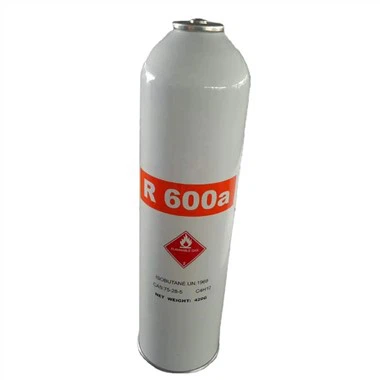
Hey there, folks! As a supplier of difluoroethane, I often get asked about all sorts of things related to this chemical. One question that pops up a lot is, "What is the density of difluoroethane?" Well, let's dive right into it and break it down in a way that's easy to understand.
First off, difluoroethane, also known as R152a, is a colorless gas with a slight ether - like odor. It's used in a bunch of different applications, like in refrigeration systems as R152a Refrigerant and as a propellant in aerosol products.
The density of a substance is basically how much mass is packed into a given volume. For difluoroethane, its density can vary depending on a few factors, mainly temperature and pressure. At standard temperature and pressure (STP), which is defined as 0 degrees Celsius (273.15 K) and 1 atmosphere (101.325 kPa), the density of difluoroethane is approximately 3.66 g/L.
But here's the thing, in real - world scenarios, we rarely deal with STP. Most of the time, the temperature and pressure are different. As the temperature increases, the density of difluoroethane decreases. This is because the gas molecules start moving around more vigorously and spread out, taking up more space. On the other hand, when the pressure increases, the gas molecules are forced closer together, and the density goes up.
Let's take a look at some practical examples. In a refrigeration system, the difluoroethane is under different pressure and temperature conditions at different parts of the cycle. In the condenser, where the gas is being turned into a liquid, the pressure is high, and the temperature is relatively low compared to the evaporator. So, the density of difluoroethane in the condenser is much higher than in the evaporator.
Now, why does the density matter? Well, it's crucial for a few reasons. For one, if you're designing a refrigeration system or an aerosol product, you need to know the density of difluoroethane to calculate the right amount of the gas to use. If you use too little, the system won't work efficiently. If you use too much, it could lead to problems like over - pressurization and potential safety hazards.
Another reason density is important is for transportation and storage. When we're shipping difluoroethane, we need to know how much space it will take up in the containers based on its density. This helps us plan the logistics and ensure that everything is transported safely and cost - effectively.


As a R152a Gas supplier, I've seen firsthand how important it is to have a good understanding of the properties of difluoroethane, including its density. We work closely with our customers to make sure they get the best product for their needs, and having this technical knowledge is a big part of that.
If you're in the market for difluoroethane, you might be wondering what else you should consider. Well, apart from density, you also need to look at things like purity, flammability, and compatibility with other materials. Difluoroethane is flammable, so proper safety measures need to be taken during handling and storage. And when it comes to purity, a higher purity level usually means better performance in your applications.
We take pride in providing high - quality difluoroethane to our customers. Our product goes through strict quality control processes to ensure that it meets all the necessary standards. Whether you're using it for refrigeration, as a propellant, or in some other industrial application, you can count on our difluoroethane to deliver consistent results.
Now, I know all this technical talk can be a bit overwhelming, but don't worry. We're here to help. If you have any questions about the density of difluoroethane or any other aspect of our product, just reach out to us. We have a team of experts who are ready to answer your queries and guide you through the purchasing process.
If you're interested in buying difluoroethane for your business, we're more than happy to have a chat with you. We can discuss your specific requirements, provide you with a quote, and talk about the best way to get the product to you. Whether you need a small quantity for testing or a large - scale supply for your production line, we've got you covered.
So, don't hesitate to get in touch. Let's work together to find the right difluoroethane solution for your needs. Whether you're a small - scale manufacturer or a large industrial company, we're committed to providing you with top - notch service and a high - quality product.
In conclusion, the density of difluoroethane is an important property that can vary depending on temperature and pressure. Understanding this property is key for designing, operating, and transporting systems that use difluoroethane. As a supplier, we have the knowledge and experience to help you make the most of this versatile chemical. If you're looking to purchase difluoroethane, give us a shout, and let's start a conversation.
References
- Handbook of Chemistry and Physics
- Technical data sheets from difluoroethane manufacturers