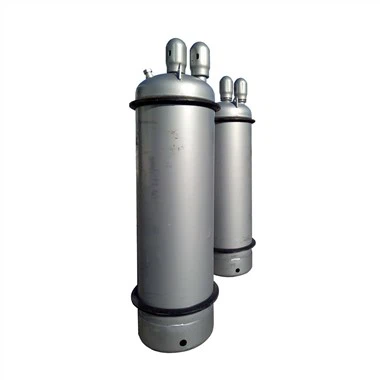
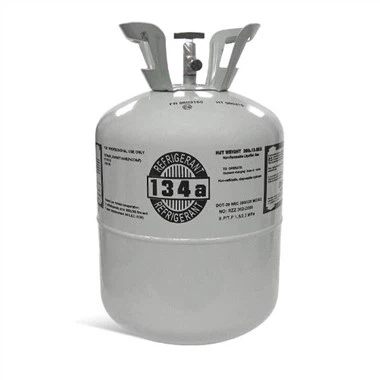
R600 gas, also known as isobutane, is a hydrocarbon refrigerant that has gained significant popularity in recent years due to its excellent thermodynamic properties and low environmental impact. As a leading R600 gas supplier, I am often asked about how this gas is produced. In this blog post, I will provide a detailed overview of the production process of R600 gas, from its raw materials to the final product.
Raw Materials
The primary raw material for R600 gas production is natural gas or petroleum. These fossil fuels contain a mixture of hydrocarbons, including butane and isobutane. However, the concentration of isobutane in these raw materials is relatively low, typically around 1-2%. Therefore, a separation process is required to isolate isobutane from the other hydrocarbons.
Separation Process
The separation of isobutane from natural gas or petroleum involves several steps. The first step is the removal of impurities, such as sulfur compounds and water, from the raw material. This is typically done using a combination of physical and chemical processes, such as absorption, adsorption, and distillation.
Once the impurities have been removed, the raw material is subjected to a fractionation process. Fractionation is a process that separates a mixture of hydrocarbons based on their boiling points. In the case of R600 gas production, the fractionation process is designed to separate isobutane from the other hydrocarbons in the raw material.
The fractionation process typically involves the use of a distillation column. The distillation column is a tall, vertical column that contains a series of trays or packing materials. The raw material is fed into the column at the bottom, and a heating element is used to vaporize the hydrocarbons. The vapor rises up the column, and as it cools, it condenses on the trays or packing materials. The different hydrocarbons have different boiling points, so they condense at different levels in the column. The isobutane, which has a lower boiling point than the other hydrocarbons, is collected at the top of the column.
Purification Process
After the isobutane has been separated from the other hydrocarbons, it is subjected to a purification process. The purification process is designed to remove any remaining impurities from the isobutane, such as other hydrocarbons, water, and sulfur compounds.
The purification process typically involves the use of a series of adsorption beds. The adsorption beds contain a porous material, such as activated carbon or molecular sieves, that can adsorb the impurities from the isobutane. The isobutane is passed through the adsorption beds, and the impurities are adsorbed onto the porous material. The purified isobutane is then collected at the other end of the adsorption beds.
Quality Control
Once the R600 gas has been produced and purified, it is subjected to a rigorous quality control process. The quality control process is designed to ensure that the R600 gas meets the required specifications and standards.
The quality control process typically involves the use of a variety of analytical techniques, such as gas chromatography, mass spectrometry, and infrared spectroscopy. These techniques are used to analyze the composition and purity of the R600 gas. The R600 gas is also tested for its thermodynamic properties, such as its boiling point, melting point, and density.
Environmental Impact
One of the main advantages of R600 gas is its low environmental impact. R600 gas has a very low global warming potential (GWP) and ozone depletion potential (ODP). This means that it has a minimal impact on the environment compared to other refrigerants, such as chlorofluorocarbons (CFCs) and hydrochlorofluorocarbons (HCFCs).
In addition, R600 gas is a natural refrigerant, which means that it is non-toxic and non-flammable. This makes it a safer and more environmentally friendly alternative to other refrigerants.
Applications
R600 gas is used in a variety of applications, including refrigeration, air conditioning, and heat pumps. It is particularly well-suited for use in domestic refrigerators and freezers, as it provides excellent cooling performance and energy efficiency.
In addition, R600 gas is also used in commercial refrigeration systems, such as supermarket display cases and cold storage facilities. It is also used in industrial refrigeration systems, such as food processing plants and chemical factories.
Conclusion
In conclusion, R600 gas is a high-quality refrigerant that is produced through a complex process of separation, purification, and quality control. As a leading R600 gas supplier, we are committed to providing our customers with the highest quality R600 gas at competitive prices.
If you are interested in purchasing R600 gas, please visit our website at R600 Gas for more information. You can also learn more about our R600a Refrigerant and Isobutane Gas Refrigerant products. We look forward to working with you to meet your refrigeration needs.


References
- "Refrigerants: Properties and Applications." CRC Press, 2018.
- "Handbook of Refrigeration." McGraw-Hill, 2019.
- "Thermodynamics of Refrigeration Cycles." Wiley, 2020.