

Wood ether, also known as methyl ether or dimethyl ether (DME), is a colorless gas with a faint ether - like odor at room temperature and pressure. It is commonly used in various industrial applications, such as aerosol propellants, fuel, and as a solvent in some chemical processes. As a wood ether supplier, I have witnessed firsthand the diverse uses and the importance of understanding how it affects different properties of solutions, especially viscosity. In this blog, we will explore in detail how wood ether impacts the viscosity of solutions.
The Basics of Viscosity
Viscosity is a measure of a fluid's resistance to flow. A high - viscosity fluid, like honey, flows slowly, while a low - viscosity fluid, like water, flows easily. It depends on several factors, including the intermolecular forces between the molecules of the fluid, the size and shape of the molecules, and temperature. When we introduce a solute like wood ether into a solvent, these factors can be significantly altered, leading to changes in viscosity.
Molecular Interactions and Viscosity
Wood ether has a relatively simple molecular structure, with the chemical formula CH₃OCH₃. The oxygen atom in the molecule creates a polar region, which allows it to form dipole - dipole interactions with other polar molecules. When wood ether is added to a solution, these intermolecular interactions play a crucial role in determining the viscosity change.
- Weakening of Solvent - Solvent Interactions: In many solvents, there are strong intermolecular forces holding the solvent molecules together. For example, in water, hydrogen bonds are the dominant force. When wood ether is added to water, the wood ether molecules can disrupt these hydrogen bonds. The dipole - dipole interactions of wood ether with water are not as strong as the hydrogen bonds in pure water. As a result, the overall intermolecular forces in the solution are weakened, and the molecules can move more freely. This leads to a decrease in viscosity.
- Formation of New Intermolecular Forces: In non - polar solvents, wood ether can still interact with the solvent molecules through London dispersion forces. Although these forces are relatively weak, they can cause the wood ether and solvent molecules to associate in a certain way. If the new associations formed between wood ether and the solvent molecules are more compact or ordered than the original solvent - solvent associations, the viscosity of the solution may increase. However, this effect is usually less significant compared to the disruption of strong intermolecular forces in polar solvents.
Concentration of Wood Ether and Viscosity
The concentration of wood ether in a solution is a key factor influencing viscosity.
- Low Concentration: At low concentrations of wood ether, the effect on viscosity is often minimal. The wood ether molecules are dispersed throughout the solvent, and their impact on the overall intermolecular forces of the solution is relatively small. In some cases, there may be a slight decrease in viscosity due to the disruption of some weak solvent - solvent interactions.
- High Concentration: As the concentration of wood ether increases, the changes in viscosity become more pronounced. In polar solvents, a high concentration of wood ether can lead to a significant reduction in viscosity as more and more of the strong solvent - solvent interactions are disrupted. In non - polar solvents, at high concentrations, the formation of large wood ether - solvent clusters may increase the viscosity, but this depends on the specific nature of the solvent and the wood ether - solvent interactions.
Temperature and the Role of Wood Ether in Viscosity
Temperature also has a significant influence on the viscosity of solutions, and wood ether can modify this relationship.
- General Temperature - Viscosity Relationship: For most fluids, viscosity decreases with increasing temperature. This is because the higher the temperature, the more kinetic energy the molecules have, and they can overcome the intermolecular forces more easily.
- Wood Ether's Impact: When wood ether is present in a solution, it can change the way the solution responds to temperature changes. In some cases, wood ether can act as a "lubricant" between the solvent molecules, reducing the sensitivity of the solution's viscosity to temperature changes. For example, in a solution where the solvent has a high viscosity at low temperatures, adding wood ether can make the solution flow more easily at low temperatures, and the decrease in viscosity with increasing temperature may be less dramatic compared to the pure solvent.
Applications in Industry
The ability of wood ether to affect the viscosity of solutions has numerous industrial applications:
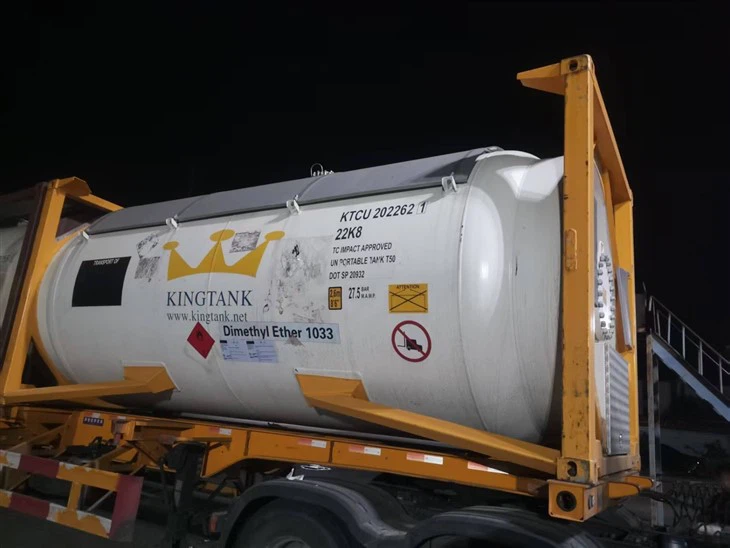

- Aerosol Products: Wood ether is widely used as an aerosol propellant. In aerosol formulations, it is important to have a solution with the right viscosity. By adjusting the amount of wood ether, manufacturers can control the spray pattern and the flow of the product. For more information on Dimethyl Ether Aerosol, you can visit our product page.
- Fuel Blends: In fuel applications, the viscosity of the fuel affects its combustion properties. Wood ether can be added to fuel blends to adjust the viscosity, making it easier to pump and atomize in engines. This can improve the efficiency of the combustion process and reduce emissions.
- Chemical Reactions: In some chemical reactions, the viscosity of the reaction medium can affect the reaction rate and the yield. By using wood ether to adjust the viscosity of the solution, chemists can optimize the reaction conditions.
Comparison with Other Similar Compounds
When considering the impact of wood ether on solution viscosity, it is useful to compare it with other similar compounds. For example, Isobutane Gas is another common component in aerosol and fuel applications. Isobutane is non - polar, while wood ether is polar. The non - polar nature of isobutane means that its intermolecular interactions are mainly London dispersion forces. When added to a solution, the effect on viscosity is different from wood ether. Isobutane may have a less significant impact on the viscosity of polar solvents compared to wood ether, as it cannot disrupt the strong intermolecular forces like hydrogen bonds as effectively.
On the other hand, Dimethyl Ether High Purity is often used in applications where high - quality wood ether is required. The high purity of this product ensures more consistent and predictable effects on solution viscosity, which is crucial in industries such as pharmaceuticals and high - tech manufacturing.
Conclusion and Call to Action
In conclusion, wood ether can significantly affect the viscosity of solutions through its intermolecular interactions with solvent molecules, the concentration in the solution, and its interaction with temperature. Understanding these effects is essential for various industrial applications, from aerosol products to fuel blends.
As a wood ether supplier, we are committed to providing high - quality products and technical support to our customers. If you are interested in using wood ether in your applications and want to discuss how it can be optimized for your specific needs, such as adjusting the viscosity of your solutions, please feel free to contact us for a procurement discussion. We are here to help you find the best solutions for your business.
References
- Atkins, P. W., & de Paula, J. (2006). Physical Chemistry. Oxford University Press.
- Reichardt, C. (2003). Solvents and Solvent Effects in Organic Chemistry. Wiley - VCH.
- Poling, B. E., Prausnitz, J. M., & O'Connell, J. P. (2001). The Properties of Gases and Liquids. McGraw - Hill.


