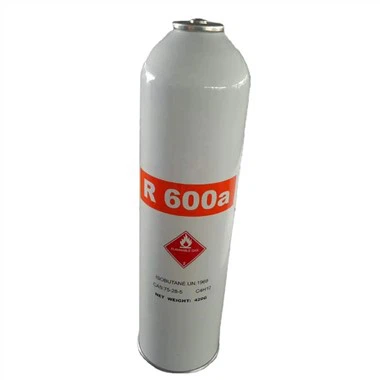
Dimethyl ether (DME) is a colorless gas at room temperature and pressure, with a faint, sweet odor. It is soluble in a wide range of organic solvents and has a high solubility in water. In recent years, DME has attracted increasing attention as a solvent in various chemical reactions due to its unique physical and chemical properties. As a leading supplier of dimethyl ether, we are well - versed in its applications and potential in different types of chemical reactions.
SN1 and SN2 Nucleophilic Substitution Reactions
Nucleophilic substitution reactions are fundamental in organic chemistry. In both SN1 and SN2 reactions, the choice of solvent can significantly impact the reaction rate and outcome.
In SN1 reactions, a carbocation intermediate is formed. DME can be an effective solvent because it is a polar aprotic solvent. Polar aprotic solvents do not form hydrogen bonds with anions, which allows the nucleophile to be more reactive. The relatively low dielectric constant of DME compared to some other solvents like water or alcohols can also help in stabilizing the carbocation intermediate. For example, in the reaction between tert - butyl bromide and a nucleophile such as sodium cyanide, DME can solvate the ions involved in the reaction. The positive end of the DME molecule (the carbon - oxygen dipoles) can interact with the negatively charged cyanide ion, and the overall solvation environment can promote the formation of the carbocation intermediate and subsequent reaction with the nucleophile.
In SN2 reactions, where the reaction occurs in a single step with a concerted mechanism, the structure of the solvent can influence the ability of the nucleophile to approach the substrate. DME's linear and relatively non - bulky molecular structure allows for good access of the nucleophile to the substrate. For instance, in the reaction between methyl iodide and sodium hydroxide, DME can provide a medium where the hydroxide ion can freely approach the methyl iodide molecule without being overly solvated. The aprotic nature of DME also means that there is no competition from hydrogen bonding for the nucleophile, facilitating the SN2 reaction.
E1 and E2 Elimination Reactions
Elimination reactions are another important class of organic reactions. E1 reactions involve the formation of a carbocation intermediate followed by the loss of a proton to form an alkene. Similar to SN1 reactions, DME's polar aprotic nature makes it suitable. The carbocation formed during the E1 reaction can be solvated by the dipoles in DME molecules. The positive end of the DME dipoles can interact with the negatively charged counter - ion of the carbocation, and the overall solvation stabilizes the reaction intermediate. For example, in the reaction of 2 - bromo - 2 - methylpropane with a base to form 2 - methylpropene through an E1 mechanism, DME can assist in the formation and stabilization of the carbocation.
In E2 reactions, which are bimolecular and occur in a single step, DME can also play a crucial role. The aprotic nature of DME ensures that the base remains relatively free to abstract a proton from the substrate at the same time as the leaving group departs. In the reaction of 1 - bromo - 2 - methylcyclohexane with a strong base like potassium tert - butoxide to form a cycloalkene, DME provides an environment where the base - promoted elimination can occur efficiently. The lack of hydrogen - bonding interactions with the base allows the base to more effectively attack the proton, leading to the formation of the double bond.
Oxidation Reactions
DME can also be used as a solvent in certain oxidation reactions. In some oxidation reactions using metal - based oxidants, DME can solvate the reactants and the oxidizing agents. For example, in the oxidation of primary alcohols to aldehydes using chromium - based oxidants such as pyridinium chlorochromate (PCC), DME can dissolve both the alcohol substrate and the PCC. The solvent helps in bringing the reactants into close contact, facilitating the transfer of electrons from the alcohol to the oxidizing agent. The relatively stable nature of DME under oxidation conditions means that it does not react with the oxidant itself, allowing the reaction to proceed selectively towards the formation of the desired oxidation product.
Reduction Reactions
In reduction reactions, DME can serve as a suitable solvent. For example, in catalytic hydrogenation reactions, where a metal catalyst such as palladium on carbon is used to add hydrogen to an unsaturated compound, DME can dissolve the substrate and provide a medium for the reaction to occur. The hydrogen gas can dissolve in DME to some extent, and the substrate can interact with the metal catalyst in the solution. The aprotic nature of DME also means that it does not interfere with the catalytic process. For instance, in the hydrogenation of an alkene to an alkane, DME can ensure that the reactants and the catalyst are in a homogeneous environment, promoting an efficient reaction.
Aerosol - Related Reactions
DME is widely used in the aerosol industry. Dimethyl Ether Aerosol Grade and Aerosol DME are common products in this field. In aerosol formulations, DME can act as a propellant as well as a solvent. When formulating aerosol products such as paints, insecticides, or personal care products, the chemical reactions involved in the formation of the desired product can take place in a DME - based system. For example, in the synthesis of a polymer - based aerosol paint, DME can dissolve the monomers and the initiators. The polymerization reaction can then occur within the DME - containing aerosol formulation. The volatile nature of DME also allows for easy dispersion of the product when the aerosol is sprayed.


Co - Solvent in Complex Reaction Systems
In some cases, DME can be used as a co - solvent. When combined with other solvents such as Isobutane Gas, it can provide a unique solvent system for specific chemical reactions. The combination of DME with isobutane can adjust the polarity, volatility, and solvation properties of the overall solvent mixture. For example, in some polymerization reactions where a specific range of solubility parameters is required for the monomers and the growing polymer chains, a DME - isobutane co - solvent system can be optimized to achieve the best reaction conditions. The co - solvent system can also influence the morphology and properties of the final polymer product.
As a reliable dimethyl ether supplier, we understand the diverse needs of our customers in different chemical reaction applications. Our high - quality dimethyl ether products are carefully produced and tested to ensure their purity and suitability for various reactions. Whether you are involved in small - scale laboratory research or large - scale industrial production, we can provide the right amount of dimethyl ether to meet your requirements.
If you are interested in using dimethyl ether in your chemical reactions or have any questions about its applications, we encourage you to contact us for a detailed consultation. We are ready to discuss your specific needs and help you find the most appropriate solutions for your chemical processes.
References
- March, J. Advanced Organic Chemistry: Reactions, Mechanisms, and Structure. Wiley, 2001.
- Carey, F. A., & Sundberg, R. J. Advanced Organic Chemistry Part A: Structure and Mechanisms. Springer, 2007.
- Smith, M. B., & March, J. March's Advanced Organic Chemistry: Reactions, Mechanisms, and Structure. Wiley, 2013.