In the realm of refrigeration, the choice of refrigerant is a critical decision that impacts not only the efficiency of cooling systems but also environmental sustainability and operational safety. As a supplier of CH3OCH3, also known as dimethyl ether (DME), I am often asked how it compares to other refrigerants in the market. In this blog post, I will delve into the characteristics, advantages, and limitations of CH3OCH3 and contrast them with some of the most commonly used refrigerants.
Physical and Chemical Properties
CH3OCH3 is a colorless gas with a faint, sweet odor at room temperature and pressure. It has a boiling point of -24.8°C, which makes it suitable for a wide range of refrigeration applications. One of the key advantages of CH3OCH3 is its excellent solubility in lubricating oils, which helps to ensure smooth operation of the compressor in refrigeration systems.
In comparison, traditional refrigerants such as chlorofluorocarbons (CFCs) and hydrochlorofluorocarbons (HCFCs), like R12 and R22, have been phased out due to their high ozone - depleting potential (ODP). These substances contain chlorine atoms that can react with ozone in the stratosphere, leading to the destruction of the ozone layer. On the other hand, hydrofluorocarbons (HFCs), such as R134a and R410A, do not have an ODP but have a high global warming potential (GWP). GWP is a measure of how much a greenhouse gas contributes to global warming over a specific time period compared to carbon dioxide.
Environmental Impact
One of the most significant benefits of CH3OCH3 as a refrigerant is its low environmental impact. It has an ODP of zero, which means it does not contribute to ozone layer depletion. Additionally, its GWP is extremely low compared to many HFCs. For instance, R134a has a GWP of about 1430 over a 100 - year time horizon, while CH3OCH3 has a GWP close to zero. This makes CH3OCH3 an attractive option for companies looking to reduce their carbon footprint and comply with increasingly strict environmental regulations.
Another aspect to consider is the end - of - life treatment of refrigerants. Since CH3OCH3 is a simple organic compound, it is more easily degradable in the environment compared to some complex synthetic refrigerants. This reduces the long - term environmental burden associated with refrigerant disposal.
Energy Efficiency
Energy efficiency is a crucial factor in refrigeration systems, as it directly impacts operating costs and overall sustainability. CH3OCH3 has a relatively high coefficient of performance (COP), which is a measure of the efficiency of a refrigeration cycle. A higher COP means that the system can produce more cooling effect per unit of energy input.

Compared to some other natural refrigerants like ammonia (NH3), which also has good energy efficiency, CH3OCH3 has the advantage of being less toxic and corrosive. Ammonia is a highly toxic gas that can cause serious health problems if leaked, and it requires special handling and safety measures. CH3OCH3, while flammable, has a lower toxicity level, which makes it a more practical option in certain applications where safety is a concern.
Safety Considerations
One of the main drawbacks of CH3OCH3 is its flammability. It has a lower flammable limit (LFL) in air of about 3.4% by volume and an upper flammable limit (UFL) of 17%. This means that in the presence of an ignition source, a mixture of CH3OCH3 and air within this concentration range can ignite. However, modern refrigeration systems can be designed with proper safety features to mitigate the risk of fire or explosion.
In contrast, some other refrigerants like carbon dioxide (CO2) and water (H2O) are non - flammable. CO2 is widely used in commercial refrigeration, especially in transcritical systems. While it is safe in terms of flammability, CO2 systems often operate at high pressures, which require robust and expensive equipment.
Compatibility with Existing Systems
When considering a new refrigerant, compatibility with existing refrigeration systems is an important factor. CH3OCH3 has good compatibility with many common materials used in refrigeration systems, such as copper, aluminum, and some types of elastomers. This means that in many cases, existing systems can be retrofitted to use CH3OCH3 with relatively minor modifications.
For example, compared to R404A, which is a widely used HFC refrigerant, CH3OCH3 can potentially be used as a drop - in replacement in some systems after proper evaluation and necessary adjustments. This can save significant costs for businesses that want to switch to a more environmentally friendly refrigerant without a complete system overhaul.
Cost - Effectiveness
The cost of refrigerants is a major consideration for businesses. CH3OCH3 is relatively inexpensive to produce compared to some high - performance synthetic refrigerants. The raw materials for producing CH3OCH3 are abundant, and the production process is well - established.
In addition to the initial cost of the refrigerant, the long - term operating costs also play a role. Due to its good energy efficiency, using CH3OCH3 can result in lower energy bills over the lifetime of the refrigeration system. This makes it an economically viable option for small and large - scale refrigeration applications alike.
Comparison with Specific Refrigerants
Isobutane Gas
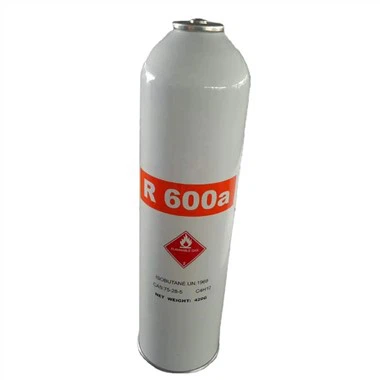
Isobutane (R600a) is another natural refrigerant that is commonly used in domestic refrigerators and small - scale refrigeration applications. Similar to CH3OCH3, isobutane has a low GWP and is energy - efficient. However, isobutane has a lower boiling point than CH3OCH3 (-11.7°C), which makes it more suitable for applications requiring very low - temperature refrigeration. You can find more information about Isobutane Gas.
On the other hand, CH3OCH3 has better solubility in lubricating oils, which can lead to better compressor performance and longer equipment life. Additionally, CH3OCH3 can be used in a wider range of refrigeration applications, from medium - temperature to low - temperature systems.
Dimethyl Ether Aerosol and Premium Grade
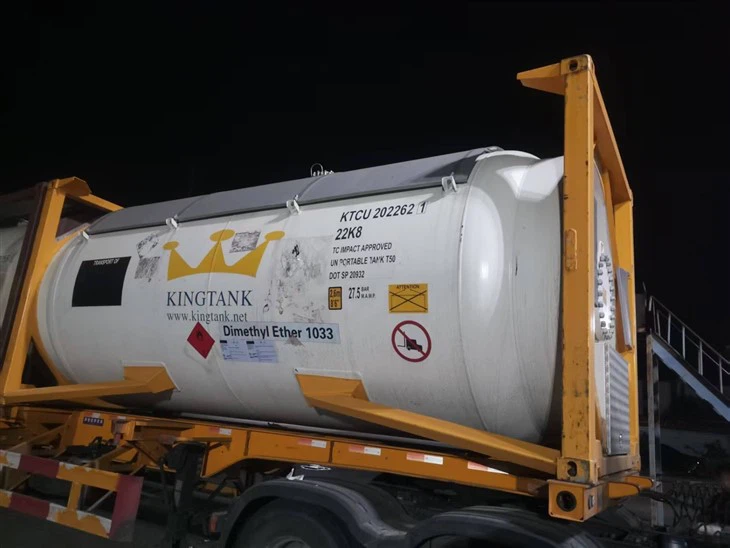
Our company offers different grades of dimethyl ether, including Dimethyl Ether Aerosol and Dimethyl Ether Premium Grade. The aerosol grade is often used in aerosol products due to its good propellant properties, while the premium grade is designed for high - performance refrigeration systems. These grades are carefully formulated to meet the specific requirements of different applications, ensuring optimal performance and safety.
Conclusion and Call to Action
In conclusion, CH3OCH3 offers a compelling alternative to many traditional and modern refrigerants in terms of environmental impact, energy efficiency, compatibility with existing systems, and cost - effectiveness. While it has some limitations, such as flammability, proper safety measures can be implemented to ensure its safe use.
If you are in the market for a new refrigerant or considering a switch to a more sustainable option, I encourage you to explore the benefits of CH3OCH3. Our company has extensive experience in supplying high - quality dimethyl ether, and we are committed to providing top - notch products and technical support. Please feel free to contact us for more information or to discuss your specific refrigeration needs. We look forward to the opportunity to work with you and help you make an informed decision about the best refrigerant for your application.
References
- "Refrigeration and Air Conditioning Technology" by William C. Whitman, William M. Johnson, and John A. Tomczyk
- "Handbook of Refrigeration" edited by James G. Brennan
- International Institute of Refrigeration (IIR) publications on refrigerants and their applications