Yo! I'm a supplier of methyl ether, and today I wanna talk about how methyl ether reacts with oxygen. This is super important in lots of industries, from energy to chemical manufacturing.
Understanding Methyl Ether
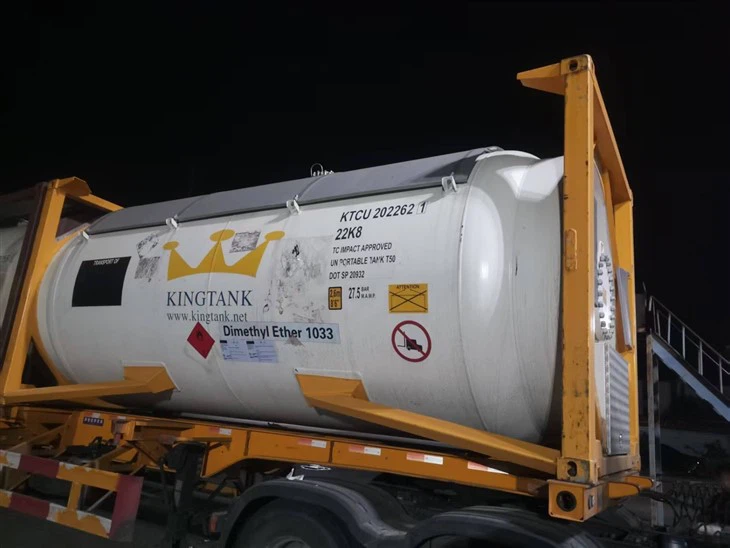
First things first, let's quickly go over what methyl ether is. Methyl ether, also known as dimethyl ether (DME), is a colorless gas with a faint, sweet smell. It's got a simple chemical formula: C₂H₆O. It's pretty cool because it can be made from a bunch of different sources like natural gas, coal, and biomass. That's why we see it being used more and more in various applications. For instance, it's used as a Aerosol DME propellant in the aerosol industry, and we also offer Dimethyl Ether High Purity for more specialized uses.
The Reaction Basics
When methyl ether reacts with oxygen, it undergoes a combustion reaction. Combustion is basically a chemical reaction where a substance reacts with oxygen, usually producing heat and light. In the case of methyl ether, the reaction is as follows:
C₂H₆O + 3O₂ → 2CO₂ + 3H₂O
This equation tells us that one molecule of methyl ether reacts with three molecules of oxygen to form two molecules of carbon dioxide and three molecules of water. Simple, right? But let's break it down a bit more.
The Conditions for the Reaction
For this reaction to happen, we need a few things. First off, we need an appropriate ratio of methyl ether and oxygen. If there's too much methyl ether and not enough oxygen, we'll get an incomplete combustion. This means that instead of getting just carbon dioxide and water, we'll also get some carbon monoxide (CO) and maybe even some solid carbon particles. Carbon monoxide is a big no - no because it's super toxic.
The reaction also needs an ignition source. Methyl ether and oxygen can just sit there together, but without something to kick - start the reaction, nothing's gonna happen. A spark, a flame, or even a high - enough temperature can act as an ignition source. Once the reaction starts, it's exothermic, which means it releases heat. This heat can then keep the reaction going.
Applications of the Reaction
The combustion of methyl ether with oxygen has a ton of applications. One major area is in the energy sector. Methyl ether is being considered as an alternative fuel. It burns cleanly, and the products of combustion (carbon dioxide and water) are less harmful compared to some of the other fossil fuels.
In engines, when methyl ether reacts with oxygen in the combustion chamber, the energy released from the reaction is used to move the pistons. This is similar to how gasoline or diesel engines work, but methyl ether has some advantages. It has a high cetane number, which means it ignites easily and burns more efficiently.

Another application is in the chemical industry. The carbon dioxide and water produced from the reaction can be used as raw materials for other chemical processes. For example, carbon dioxide can be used in the production of carbonates, and water is a key ingredient in many chemical reactions.
Safety Considerations
Since methyl ether reacts so vigorously with oxygen, safety is a huge deal. Methyl ether is a flammable gas, and if not handled properly, it can lead to explosions or fires. When storing and transporting methyl ether, it's crucial to keep it away from oxygen sources and ignition sources.
We also need to be careful about the ventilation in areas where methyl ether is used. If there's a leak, the gas can mix with air (which contains oxygen) and form a flammable mixture. Good ventilation helps to prevent the build - up of this mixture and reduces the risk of an explosion.
Comparing with Other Gases
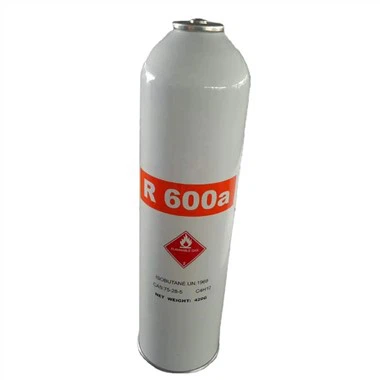
Let's compare methyl ether's reaction with oxygen to that of Isobutane Gas. Isobutane is another flammable gas, and it also undergoes combustion with oxygen. The combustion reaction of isobutane is:
2C₄H₁₀ + 13O₂ → 8CO₂ + 10H₂O
One difference is the amount of oxygen required. Isobutane needs more oxygen molecules per molecule of the fuel compared to methyl ether. This means that in an environment with limited oxygen, methyl ether might burn more completely.
Another difference is in the energy output. The energy released per mole of isobutane is generally higher than that of methyl ether. But methyl ether has the advantage of being cleaner - burning and easier to ignite.
Our Offerings as a Supplier
As a methyl ether supplier, we understand the importance of providing high - quality products. We offer Dimethyl Ether High Purity that meets the strictest standards. Whether you're using it for fuel, as an aerosol propellant, or in chemical manufacturing, our product is reliable.
We also provide technical support to our customers. If you have any questions about how to handle methyl ether, the reaction with oxygen, or safety measures, our team is here to help. We know that every application is different, and we're committed to making sure you get the most out of our product.
Contact Us for Procurement
If you're in the market for methyl ether, we'd love to talk to you. Whether you're a small - scale user or a large - scale industrial company, we can work with you to meet your needs. Just reach out to us to start the procurement process. We're confident that our methyl ether will be a great fit for your operations.
References
- Smith, J. (2020). Chemical Reactions of Organic Compounds. Publisher.
- Johnson, A. (2019). Alternative Fuels and Their Combustion Properties. Journal of Energy Research.