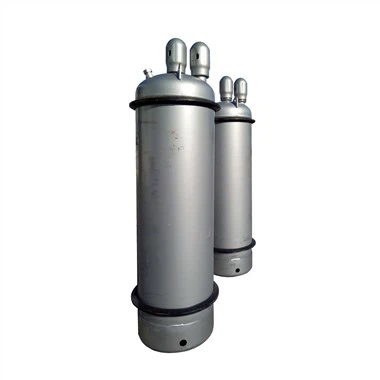
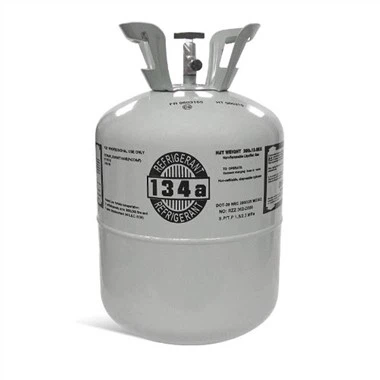
As a supplier of methyl ether, also known as dimethyl ether (DME), I've been deeply involved in the industry and have witnessed firsthand the importance of understanding the solubility of this compound in water. Solubility is a crucial factor that impacts various applications of methyl ether, from its use in aerosol products to its role in chemical reactions. In this blog, I'll explore the key factors that affect the solubility of methyl ether in water.
Molecular Structure and Intermolecular Forces
The solubility of a substance in water is fundamentally determined by the nature of its intermolecular forces and molecular structure. Methyl ether has the chemical formula CH₃OCH₃. It is a polar molecule due to the presence of the oxygen atom, which has a higher electronegativity than carbon and hydrogen. This creates a dipole moment in the molecule, with the oxygen atom being slightly negative and the carbon - hydrogen groups being slightly positive.


Water, on the other hand, is a highly polar molecule with a bent structure and a significant dipole moment. The solubility of methyl ether in water can be attributed to the formation of hydrogen bonds and dipole - dipole interactions. The oxygen atom in methyl ether can act as a hydrogen - bond acceptor, interacting with the hydrogen atoms of water molecules. These intermolecular forces help to stabilize the methyl ether molecules in the aqueous environment, allowing them to dissolve to a certain extent.
However, the non - polar methyl groups in methyl ether also play a role. The presence of these non - polar regions limits the solubility because they do not interact favorably with the polar water molecules. The balance between the polar and non - polar parts of the methyl ether molecule determines its overall solubility in water.
Temperature
Temperature is another important factor affecting the solubility of methyl ether in water. Generally, the solubility of gases in liquids decreases with increasing temperature. Methyl ether is a gas at standard temperature and pressure (STP). When we increase the temperature, the kinetic energy of the molecules increases. This causes the methyl ether molecules to move more rapidly, making it easier for them to escape from the solution and return to the gas phase.
According to Henry's law, the solubility of a gas in a liquid is directly proportional to the partial pressure of the gas above the liquid at a constant temperature. But when the temperature changes, the relationship becomes more complex. As the temperature rises, the solubility of methyl ether in water decreases because the increased thermal energy overcomes the intermolecular forces between the methyl ether and water molecules.
Conversely, lowering the temperature can increase the solubility of methyl ether in water. At lower temperatures, the kinetic energy of the molecules is reduced, and the intermolecular forces between the methyl ether and water molecules become more significant, allowing more methyl ether molecules to remain dissolved in the water.
Pressure
Pressure has a significant impact on the solubility of methyl ether in water. As mentioned earlier, Henry's law states that the solubility of a gas in a liquid is proportional to its partial pressure above the liquid. When the pressure of methyl ether above the water surface is increased, more methyl ether molecules are forced into the water. The increased pressure provides the driving force for the gas molecules to overcome the resistance of the liquid and dissolve.
For example, in a closed system, if we increase the pressure of methyl ether gas above the water, the solubility of methyl ether in water will increase. This is because the higher pressure increases the number of collisions between the methyl ether gas molecules and the water surface, leading to more molecules dissolving in the water.
Conversely, when the pressure is decreased, the solubility of methyl ether in water decreases. The gas molecules have more freedom to escape from the solution, and the system tries to reach a new equilibrium with a lower concentration of dissolved methyl ether.
pH and Ionic Strength
The pH of the water and the presence of ions can also affect the solubility of methyl ether. In general, methyl ether is relatively stable in a wide range of pH values, and its solubility is not strongly influenced by the acidity or alkalinity of the water under normal conditions. However, extreme pH values can potentially cause chemical reactions that may indirectly impact solubility.
For instance, in highly acidic or basic solutions, there could be a possibility of protonation or deprotonation reactions involving the oxygen atom in methyl ether. These reactions could change the chemical nature of the molecule and affect its solubility.
The ionic strength of the solution is another factor. The presence of ions in the water can affect the solubility of methyl ether through a phenomenon known as the salting - in or salting - out effect. At low ionic strengths, the presence of ions can sometimes increase the solubility of methyl ether by stabilizing the solute - solvent interactions. However, at high ionic strengths, the ions can compete with the methyl ether molecules for the water molecules, leading to a decrease in solubility.
Applications and the Importance of Solubility
Understanding the factors affecting the solubility of methyl ether in water is crucial for various applications. For example, in the production of Dimethyl Ether Aerosol Grade, the solubility of methyl ether in water can impact the stability and performance of the aerosol product. If the solubility is too low, the methyl ether may separate from the water - based solution, leading to inconsistent spraying and product quality.
In the case of Dimethyl Ether Gas, the solubility in water can affect its use in chemical reactions that occur in aqueous media. A proper understanding of solubility allows for better control of reaction conditions and yields.
Similarly, Dimethyl Ether Aerosol products rely on the appropriate solubility of methyl ether in water to ensure proper dispersion and functionality. The solubility characteristics determine how well the methyl ether can be incorporated into the aerosol formulation and how effectively it can be delivered to the target surface.
Conclusion
In conclusion, the solubility of methyl ether in water is influenced by multiple factors, including its molecular structure and intermolecular forces, temperature, pressure, and the pH and ionic strength of the solution. These factors interact with each other in complex ways, and a comprehensive understanding of them is essential for the successful use of methyl ether in various applications.
As a methyl ether supplier, I'm committed to providing high - quality products and sharing my knowledge with customers. If you're interested in purchasing methyl ether for your specific applications, I encourage you to reach out for a detailed discussion. We can work together to ensure that you get the right product with the appropriate solubility characteristics for your needs.
References
- Atkins, P. W., & de Paula, J. (2006). Physical Chemistry. Oxford University Press.
- Chang, R. (2010). Chemistry. McGraw - Hill.
- Zumdahl, S. S., & Zumdahl, S. A. (2010). Chemistry. Houghton Mifflin Company.