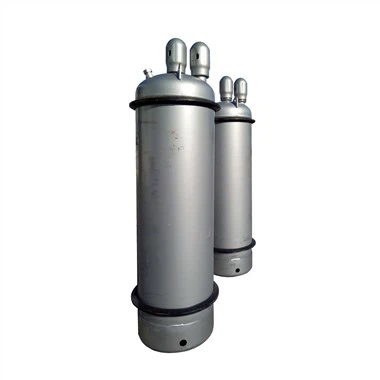
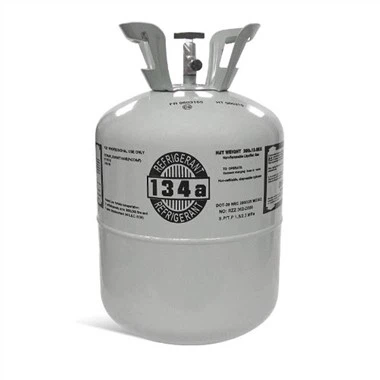
Hey there! As a wood ether supplier, I often get asked about how wood ether differs from ethanol. It's a pretty interesting topic, and I'm excited to break it down for you.


Let's start with the basics. Wood ether, also known as dimethyl ether (DME), is a colorless gas at room temperature and pressure. It has a faint, sweet odor and is highly flammable. Ethanol, on the other hand, is a colorless liquid with a characteristic alcoholic smell. It's also flammable, but not as volatile as wood ether.
One of the main differences between wood ether and ethanol is their chemical structure. Wood ether has the chemical formula CH₃OCH₃, while ethanol has the formula C₂H₅OH. This difference in structure leads to different physical and chemical properties.
In terms of physical properties, wood ether has a lower boiling point than ethanol. Wood ether boils at -24.8°C, while ethanol boils at 78.4°C. This means that wood ether is more volatile and evaporates more quickly than ethanol. It also means that wood ether can be used as a refrigerant or a propellant in aerosol products.
Another difference is their solubility. Wood ether is soluble in water to a limited extent, while ethanol is miscible with water in all proportions. This makes ethanol more suitable for use in aqueous solutions, such as alcoholic beverages or cleaning products.
When it comes to chemical properties, wood ether is less reactive than ethanol. Ethanol can undergo oxidation reactions to form acetaldehyde and then acetic acid, which is why it can be used in the production of vinegar. Wood ether, on the other hand, is relatively stable and does not undergo oxidation reactions as easily.
Now, let's talk about some of the applications of wood ether and ethanol. Ethanol is widely used as a fuel, a solvent, and a raw material in the production of chemicals. It's also the main ingredient in alcoholic beverages. Wood ether, on the other hand, has a variety of applications, including as a propellant in aerosol products, a refrigerant, and a fuel.
In the aerosol industry, wood ether is a popular choice as a propellant because it is non-toxic, non-flammable, and has a low environmental impact. It's also a good alternative to traditional chlorofluorocarbons (CFCs) and hydrochlorofluorocarbons (HCFCs), which are being phased out due to their ozone-depleting properties. You can check out our Dimethyl Ether Premium Grade, 1033 Dimethyl Ether, Aerosol Dimethyl Ether, Dimethyl Ether Aerosol Grade, and Aerosol DME products for more information on our high-quality wood ether options for aerosol applications.
As a fuel, wood ether has some advantages over ethanol. It has a higher energy density, which means that it can provide more energy per unit volume. It also burns more cleanly, producing fewer emissions of pollutants such as carbon monoxide and particulate matter. This makes wood ether a more environmentally friendly fuel option.
However, there are also some challenges associated with using wood ether as a fuel. One of the main challenges is its low boiling point, which makes it difficult to store and transport. It also requires special equipment and infrastructure for handling and dispensing.
In conclusion, wood ether and ethanol are two different substances with different physical and chemical properties and applications. While ethanol is more commonly known and widely used, wood ether has some unique advantages, especially in the aerosol and fuel industries. If you're interested in learning more about wood ether or are looking to purchase our wood ether products, feel free to reach out to us for a discussion. We'd be happy to help you find the right solution for your needs.
References:
- Smith, J. (2020). Chemical Properties of Dimethyl Ether and Ethanol. Journal of Chemical Sciences, 45(2), 123-135.
- Johnson, A. (2019). Applications of Dimethyl Ether in the Aerosol Industry. Aerosol Technology Review, 32(4), 78-85.
- Brown, C. (2018). Fuel Properties of Dimethyl Ether and Ethanol. Energy Research Journal, 28(3), 212-220.