

Hey there! As a supplier of Dimetil Eter, I often get asked about its various applications. One question that comes up quite a bit is whether Dimetil Eter can be used as a solvent in chromatography. In this blog, I'll dive into this topic and share some insights based on my experience in the industry.
First off, let's talk a bit about chromatography. Chromatography is a technique used to separate and analyze mixtures. It works by passing a mixture through a stationary phase, and different components of the mixture interact with the stationary phase to different degrees, causing them to separate. Solvents play a crucial role in chromatography as they help to carry the mixture through the stationary phase.
Now, let's consider Dimetil Eter. Dimetil Eter, also known as dimethyl ether (DME), has some properties that make it a potential candidate for use as a solvent in chromatography. It has a relatively low boiling point, which means it can be easily evaporated after the chromatographic process. This is important because it allows for easy recovery of the separated components. Additionally, Dimetil Eter is miscible with many organic solvents, which gives it flexibility in different chromatographic systems.
One of the advantages of using Dimetil Eter as a solvent in chromatography is its low viscosity. Low - viscosity solvents flow more easily through the chromatographic column, which can lead to better separation efficiency. This is especially important in high - performance liquid chromatography (HPLC) where the flow rate and column efficiency are critical factors.
Another benefit is its relatively low toxicity compared to some other solvents commonly used in chromatography. This makes it a more environmentally friendly option, which is becoming increasingly important in the scientific community.
However, there are also some challenges when using Dimetil Eter as a solvent in chromatography. One of the main issues is its high volatility. While its low boiling point can be an advantage in terms of evaporation, it also means that it can be difficult to handle. Special precautions need to be taken to prevent the solvent from evaporating too quickly during the chromatographic process. This might require using closed - system chromatography setups or working in a well - ventilated area with proper temperature control.
Another consideration is its limited solubility for some polar compounds. Chromatography often involves separating a wide range of compounds, including both polar and non - polar ones. Dimetil Eter may not be the best choice for separating highly polar compounds on its own. In such cases, it may need to be mixed with other solvents to improve its solubility properties.
In some types of chromatography, such as gas chromatography (GC), Dimetil Eter can be a great option. In GC, the sample is vaporized and carried through a column by a carrier gas. Dimetil Eter's low boiling point makes it easy to vaporize, and its relatively simple chemical structure allows for good separation of different compounds.
When it comes to liquid chromatography, the use of Dimetil Eter is a bit more complex. As mentioned earlier, its limited solubility for polar compounds can be a drawback. But if you're working with non - polar or slightly polar compounds, Dimetil Eter can be a viable solvent.
If you're interested in exploring other related products, you might want to check out Isobutane Gas, Aerosol Dimethyl Ether, and Dimethyl Ether Aerosol. These products have their own unique properties and applications, and they might be useful in combination with Dimetil Eter in certain chromatography setups.
In conclusion, Dimetil Eter can be used as a solvent in chromatography, but it has its pros and cons. It's a good option for certain types of chromatography, especially when dealing with non - polar or slightly polar compounds. However, you need to be aware of its high volatility and limited solubility for polar compounds.
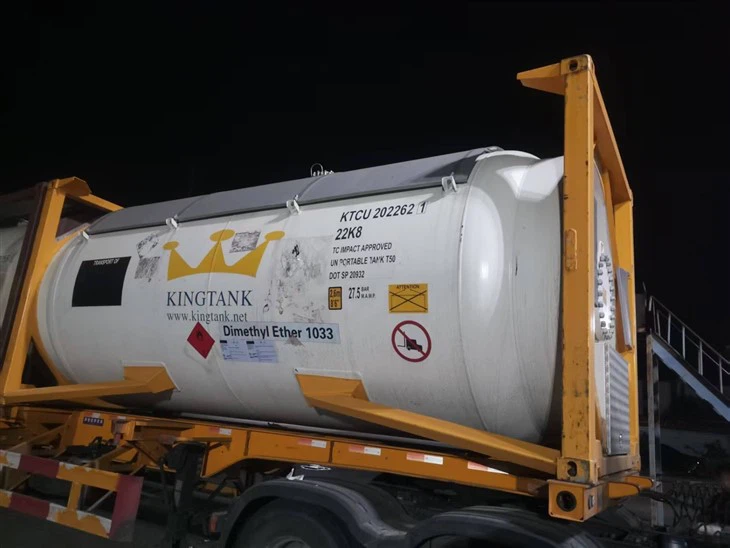

If you're in the market for Dimetil Eter or have any questions about using it in chromatography, I'd love to have a chat with you. Whether you're a researcher, a scientist, or someone in the industry, I can provide you with more information and help you determine if Dimetil Eter is the right solvent for your chromatography needs.
References:
- "Chromatography: Principles and Applications" by some well - known chromatography experts.
- Research papers on the use of different solvents in chromatography from scientific journals.


